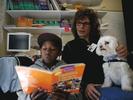
According to a pilot study published by the Cummings School of Veterinary Medicine at Tufts University, a group of second-graders who read aloud to a dog experienced a slight gain in their reading ability and attitude toward reading, while another group of second-graders who were paired up with veterinary school volunteers (all adults) experienced a decrease on both measures.
Other findings:
* No second-grade readers who were paired up with canine-counterparts left the group, while one third of those readers paired up with humans, failed to complete the study.
* Reading to a dog is a great way to build confidence and reading skills in a child. The study found the lowest level of stress for a child was when he was reading to a dog, while the highest level was when reading to one of his peers.
Click here to read the full article on how reading to dogs helps kids
Other findings:
* No second-grade readers who were paired up with canine-counterparts left the group, while one third of those readers paired up with humans, failed to complete the study.
* Reading to a dog is a great way to build confidence and reading skills in a child. The study found the lowest level of stress for a child was when he was reading to a dog, while the highest level was when reading to one of his peers.
Click here to read the full article on how reading to dogs helps kids
 RSS Feed
